Top 10 Things That Make a Cardboard Rack Retail Ready?

Time:2026-11-16 Author:Henry
0%

What makes a cardboard rack "retail ready" goes beyond a clean print and a sturdy base. It must arrive easy to open, quick to stock, stable on the shop floor, and clear to shoppers. The POPAI 2012 Shopper Engagement Study reported that 76% of purchase decisions were made in-store. That figure is dated, and shopping habits vary by category, but it underlines why visibility and access at the shelf matter. A rack that hides the product or takes too long to refill can lose attention fast.

This guide examines ten practical factors, from structural strength and carton access to graphics, product fit, and transport protection. ECR Europe’s Shelf Ready Packaging guide offers a useful operational reference: packaging should support efficient replenishment and effective presentation. In practice, that means checking details with real products, not just approving a drawing. Can staff lift the tray without tearing a corner? Does the front lip keep products visible? Small failures show up quickly. A polished prototype can still disappoint in a busy store.

The ten points that follow connect design choices with retail-floor realities. They are a checklist, not a guarantee; store formats and product weights differ. Even strong corrugated board can sag if its dimensions or loading are wrong. That deserves a second look.
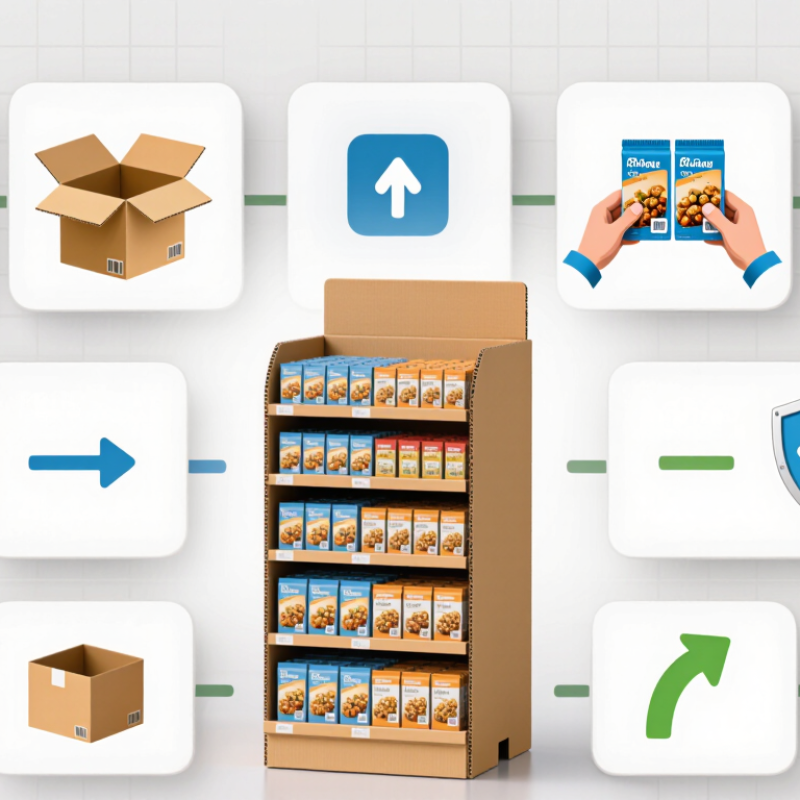
Top 10 Things That Make a Cardboard Rack Retail Ready?

Define the Rack’s Retail Purpose and Shopper Needs

A cardboard rack should solve one retail problem before it tries to look attractive. Is it introducing a product, supporting a seasonal offer, or making a small item easier to find? Choose one main purpose. Then define who will use it, where they will encounter it, and what decision they need to make.

POPAI’s 2012 Shopper Engagement Study reported that 76% of purchase decisions were made in-store in the United States. The figure is dated, so treat it as context, not a current forecast. Still, it shows why a display must communicate quickly.

Picture a shopper turning into an aisle with a basket in one hand. They need to spot the product, understand its use, and reach it without blocking the path. A rack for quick-grab snacks needs clear pricing and easy access; a rack for a considered purchase may need concise product details.

Check sightlines from several steps away, not just beside the display. A clever design on screen can feel cramped on a busy floor. That part is easy to miss.

Tips: Ask a few target shoppers what they notice first. Keep the main message near eye level, leave room for hands and baskets, and test the rack in its actual aisle. If shoppers hesitate, revise the layout.

Set Dimensions, Product Capacity, and Shelf Layout

A retail-ready cardboard rack starts with the space it must occupy. Measure the counter or floor area, then check nearby shelves, checkout lanes, and customer walkways. Record the rack’s height, width, and depth, including any header panel. A display that fits an empty room may block sightlines in a busy shop. Leave enough clearance for restocking and for shoppers to reach products without bending awkwardly.

Tips: Test the footprint with a simple floor outline. Load each shelf with the intended products, not empty boxes. Check the total weight and spread it evenly; heavy items usually belong on lower shelves. Keep the front edge clear so labels and products remain visible.

Capacity depends on more than shelf size. Product dimensions, packaging, and how often staff refill the rack all matter. Arrange items in rows that are easy to count, and avoid stacking above a safe, stable height. Shelf spacing should match the tallest package, with a little room for fingers. A layout can look tidy on a drawing and still feel cramped in person. That is worth checking. Make a sample rack, load it, and adjust shelf positions before producing the full run.

Select Cardboard Strength, Printing, and Finishes

A retail-ready cardboard rack must hold its products without sagging or wobbling. Choose board strength based on the heaviest item, shelf span, and expected restocking. A small countertop display may need less support than a tall floor unit. Ask the converter for a load test using the actual product, not a substitute. Check the rack after several hours, too; some weakness appears gradually. That matters.

Printing should make key information easy to read from a few steps away. Use strong contrast for prices, product names, and directions, while keeping small text limited. A proof viewed on screen can look brighter than the finished board. Review a printed sample under store lighting, especially if the design uses pale colors or fine details. Slight color shifts happen, and they can be frustrating.

Finishes protect the surface and shape the display’s feel. A light coating may help resist scuffs from handling, while a glossy finish can make colors appear more vivid. Matte surfaces reduce glare, but dark areas may show fingerprints. Not always. Test samples with the same products and packing process planned for production. A finish that looks excellent on a flat sheet may crack at a fold or slow assembly. That trade-off deserves a real check.

Meet Branding, Safety, and Retailer Requirements

A retail-ready cardboard rack must hold products and communicate clearly. It also needs to work on a crowded sales floor. Use approved logo files, accurate colors, and readable product or price messages. Keep key text near shopper eye level, not hidden behind merchandise. Small details matter. Check whether the print stays legible under store lighting and from several steps away. Retailer requirements may cover dimensions, packaging, assembly, or pallet delivery. Request the current specifications before approving artwork or production.

Safety and stability matter just as much. Place heavier products on lower shelves, and test the fully loaded rack on a level floor. Give it a gentle push to check for wobble. Edges should be smooth, panels secure, and fasteners clear of shoppers’ clothing. Confirm aisle clearance, material requirements, and placement rules with the retailer’s merchandising team; expectations can differ between stores. Photos of an assembled sample, its dimensions, and load-test results can help reviewers catch issues before shipment. Still, cardboard may soften in humid conditions, and rushed assembly can leave a shelf uneven. That is worth checking again.

Plan Shipping, Assembly, Stocking, and Maintenance

Top 10 Things That Make a Cardboard Rack Retail Ready?

Plan the rack around its journey, not just its final position. The U.S. Census Bureau reported that e-commerce represented 15.4% of U.S. retail sales in 2023, underscoring how many products move through distribution networks before reaching shoppers. Design panels to ship flat, protect exposed corners, and keep assembly instructions visible. Test a packed sample against the route it will actually travel; a clean warehouse floor is not a convincing simulation of rough handling.

Keep assembly simple. Use clear folds, numbered parts, and few tools, then ask someone unfamiliar with the design to build it. Watch where they pause. That matters. Once assembled, the rack should accept stock without bowing or tipping. Leave enough room for hands to refill shelves, and make the front label easy to see. The National Retail Federation’s 2023 retail returns report estimated $743 billion in merchandise returns, or 14.5% of annual retail sales. While that figure covers retail broadly, it highlights the cost of products that arrive or present poorly.

Maintenance needs a real plan, too. Give staff a quick check for crushed corners, loose tabs, moisture, and uneven shelves. Replace damaged units before they lean into a walkway or hide merchandise. Cardboard is not indestructible. And store conditions vary: a rack beside a damp entrance may fail sooner than one on a dry aisle. Document what needs repair, what can be reused, and what should be replaced; the first draft of that checklist may miss something.

Top 10 Things That Make a Cardboard Rack Retail Ready

Plan shipping, assembly, stocking, and maintenance with these practical considerations.

Ratings are illustrative planning priorities on a 1–5 scale, not survey results. Prioritize safe construction, efficient shipping, clear assembly, easy stocking, and straightforward maintenance.

FAQS

What should a cardboard retail rack do?

Give it one clear job, such as introducing a product or supporting a seasonal offer. A rack trying to do everything can confuse shoppers.

How can I make products easy to notice?

Place the main message near eye level. Check whether shoppers can spot it from several steps away, then reach products without blocking the aisle.

What details matter for a quick-grab display?

Keep pricing clear and products easy to reach. Leave space for a basket and passing shoppers. Small details matter.

How should I measure the rack?

Measure the floor or counter space, including the header panel. Check nearby shelves, checkout lanes, and walkways before settling on dimensions.

How do I choose shelf spacing and capacity?

Load a sample rack with the actual packages. Leave finger room above each product, and keep heavier items on lower shelves. A drawing can be misleading.

How can I check whether the rack is strong enough?

Ask for a load test using the heaviest intended product. Check for sagging or wobbling after several hours. Not just at first.

What should I check in a printed sample?

Review prices and product names under store lighting. Small text and pale colors may be harder to read than they appear on screen.

Which finish works best for a cardboard rack?

A light coating may help resist scuffs, while matte surfaces can reduce glare. Test samples at folds, too. A finish can look good and still slow assembly.

Conclusion

What makes a cardboard rack "retail ready" is its ability to serve shoppers, products, and store operations effectively. Start by defining the display’s purpose and understanding how customers will browse and access the products. Then choose dimensions, shelf spacing, and capacity that fit the merchandise while keeping items visible, stable, and easy to replenish. The cardboard’s strength should suit the expected load and handling, while clear printing and appropriate finishes help communicate product information and maintain a polished appearance.

A successful rack also accounts for store-specific branding, safety, and display requirements from the beginning. Consider how the unit will be packed and shipped, how quickly store staff can assemble and stock it, and what maintenance it may need during use. By coordinating these practical details with an appealing layout, a cardboard rack can arrive ready for setup, support day-to-day retail use, and provide a convenient shopping experience.

Henry

Henry

Henry is a dedicated marketing professional with a profound expertise in the company's offerings. With years of experience in the industry, he possesses an impressive understanding of the market dynamics and consumer behaviors that drive success. Henry is committed to sharing his insights through......