China Top 10 Best Materials for Heavy Duty Paper Racks?

Time:2026-09-28 Author:Isabella
0%

Choosing a heavy-duty paper rack is not just a matter of picking the strongest-looking material. A rack beside a loading door may face damp air, repeated handling, and uneven stacks of paper. Steel can provide high stiffness, while plywood and engineered wood offer practical, repairable options. Aluminum resists corrosion and is lighter, but its cost and frame design matter. Plastics and corrugated board may suit lighter or temporary uses, yet their performance can change with heat, moisture, and sustained loading.

What are the best materials for heavy-duty paper racks depends on the load, environment, rack geometry, and expected service life. The U.S. Environmental Protection Agency’s 2018 waste report estimated that 68.2% of paper and paperboard was recycled; corrugated containers reached 96.5%. These figures describe recycling, not rack strength. Still, they show why recycled fiber materials deserve consideration when the rack’s load and exposure conditions allow them. That distinction is easy to miss.

A credible comparison should examine load capacity, deflection, fasteners, edge protection, and resistance to moisture—not material names alone. ASTM D642 provides a compression-test method for shipping containers and components, but it does not certify a storage rack. Buyers should request test details or engineering calculations for the actual design. A thick panel can still sag. This guide compares ten commonly considered materials and explains where each may fit, from warehouse shelving to compact paper-storage stations. Some choices are less clear-cut than a simple ranking suggests, and real operating conditions can change the answer.
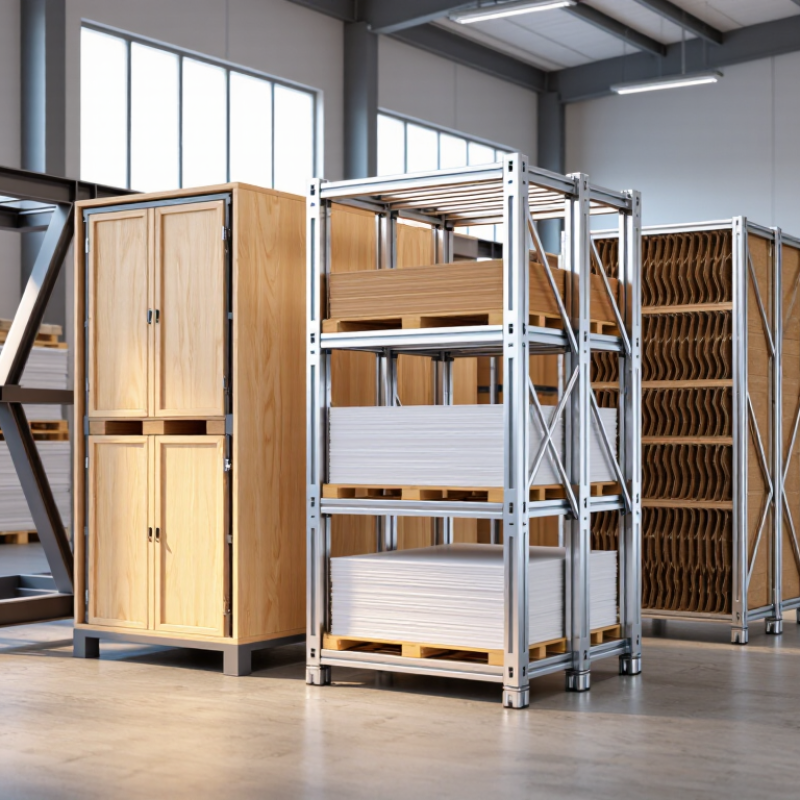
China Top 10 Best Materials for Heavy Duty Paper Racks?

How Heavy-Duty Paper Racks Are Designed for Load and Stability

Heavy-duty paper racks are designed around the real weight of each stored format, not just shelf dimensions. ISO 536:2019 provides a method for measuring paper grammage. Using 80 g/m² paper, one A4 sheet weighs about 5 grams; a 500-sheet ream weighs roughly 2.5 kilograms. Ten reams already approach 25 kilograms, before cartons or uneven stacking are considered. Small numbers add up.

Designers calculate the load on each shelf and the whole frame, then select steel thickness, beam spans, and upright bracing accordingly. ANSI MH16.1-2023 sets design requirements for industrial steel storage racks, including structural considerations relevant to load and stability. OSHA’s 29 CFR 1910.176(b) also requires stored materials to remain stable against sliding or collapse. In practice, a rack may need a wider base or diagonal bracing when paper is stored high. Anchors and level feet help, but they cannot correct an overloaded shelf. There is a trade-off: stronger components add weight and cost, while lighter designs leave less tolerance for loading mistakes. A detail worth revisiting is the actual load pattern; paper is often stacked unevenly, despite neat capacity labels.

Key Properties Used to Evaluate Rack Materials

China Top 10 Best Materials for Heavy Duty Paper Racks?

Key Properties Used to Evaluate Rack Materials

Choosing rack material starts with the load, not the catalogue description. A shelf holding dense paper reams needs stiffness as well as strength. Check whether it bends under a sustained load; a rack may look sound on day one and sag months later. That matters. Steel often offers high rigidity, while aluminum can reduce overall weight. Engineered wood may suit dry, controlled spaces, but moisture can weaken edges and joints.

Consider impact resistance and surface durability, too. In a busy stockroom, cartons get nudged, shelf corners take knocks, and coatings can chip. A small chip can expose steel to moisture, so coating quality and maintenance deserve attention. Not always obvious. For plastic components, check how they respond to heat, repeated loading, and aging; material performance varies by formulation and design.

Environmental conditions change the decision. A damp warehouse calls for better moisture and corrosion resistance than a clean office archive. Inspect joints, fasteners, and shelf supports, because the weakest connection can limit the whole rack. Compare weight capacity only when test conditions are clear and similar. Datasheets help, but they rarely capture every real-world bump or uneven floor. A perfect material rarely exists; even a strong frame may be too heavy, costly, or difficult to adjust for the space.

China’s Top 10 Material Options for Heavy-Duty Paper Racks

A qualitative comparison of common rack materials across four practical selection criteria. Ratings are relative (1 = low, 5 = high) and may vary with material grade, design, finish, and operating conditions.

How to read: Higher scores indicate stronger relative performance for that criterion. Steel options generally offer high load capacity, while aluminum offers good weight efficiency. Consider the rack’s required load, environment, and budget before choosing a material.

Top 10 Materials for Heavy-Duty Paper Racks in China

Heavy-duty paper racks in China commonly use steel frames because they handle dense reams and frequent loading. The World Steel Association reported China produced 1,019.1 million tonnes of crude steel in 2023. National Bureau of Statistics data recorded about 41.4 million tonnes of primary aluminum that year. These figures show industrial scale, not the quality of any specific rack.

Ten workable choices include mild steel, cold-rolled steel, and hot-rolled steel. Add galvanized steel, powder-coated steel, 201 and 304 stainless steel, aluminum alloy, ABS, and HDPE. For a tall rack, steel usually suits the main uprights; galvanized or coated finishes help resist corrosion in humid storage rooms. Stainless steel suits damp settings, while aluminum reduces weight. ABS and HDPE are better for bins, caps, or guards than primary load-bearing members.

Check tube thickness, weld consistency, shelf deflection, and rated load per level before comparing price. A 25-kilogram paper stack can stress a narrow shelf over time. Not always obvious. Ask suppliers for load-test results and coating specifications, then inspect a sample under realistic loading. Material labels alone cannot confirm long-term performance.

Comparing Material Strength, Durability, Cost, and Corrosion Resistance

For heavy-duty paper racks, compare strength per unit weight, service life, purchase price, and corrosion risk—not strength alone. ASTM A36 specifies a 36 ksi minimum yield strength for structural carbon steel; ASTM B209 specifies 35 ksi for 6061-T6 aluminum sheet. Aluminum is much lighter, but thin sections can flex under uneven paper loads. Carbon steel is usually economical and rigid, while stainless steel resists rust better at a higher material cost. Galvanized and zinc-plated steel add protection, but scratched edges and drilled holes remain vulnerable. Edges matter.

Plywood and hardwood suit shelves where impact resistance and easy repair matter, though moisture can cause swelling or warping. HDPE and polypropylene resist moisture, but may sag under sustained loads. Fiberglass-reinforced polymer offers corrosion resistance, yet its upfront cost and repair needs can be drawbacks. NACE International’s 2016 IMPACT study estimated corrosion costs at US$2.5 trillion globally, or 3.4% of world GDP, and reported potential savings of 15–35% through corrosion management. That makes coating upkeep part of the real cost. Not always obvious.

For purchasing, compare the full rack design: shelf span, joint quality, finish thickness, and rated load. A strong material can still fail at a weak weld or fastener. Prices vary by region and fabrication, so ask suppliers for loaded deflection and coating specifications, not just a material name. I would still test a sample rack with real paper bundles; paper weight and shelf spacing are easy to underestimate.

China Top 10 Best Materials for Heavy Duty Paper Racks? - Comparing Material Strength, Durability, Cost, and Corrosion Resistance

Rank Material or Material System Typical Yield Strength Load Durability Corrosion Resistance Relative Material Cost Best Fit and Key Considerations
1 Q355 low-alloy structural steel Nominal minimum about 355 MPa for common thickness ranges; check the applicable specification and thickness. Excellent strength-to-section-size ratio; suitable for heavily loaded frames when correctly designed and braced. Low without a protective finish. Moderate A strong choice for high-capacity rack frames. Requires paint, powder coating, or galvanizing where moisture is present.
2 Q235 / comparable low-carbon structural steel About 235 MPa minimum for common grades and thickness ranges; confirm the material certificate. Very good; widely used for welded and formed rack components. Section dimensions and bracing determine capacity. Low without a protective finish. Low A practical value option for indoor racks. Protect surfaces from humidity and promptly repair damaged coatings.
3 Hot-dip galvanized structural steel Depends on the underlying steel grade and section thickness. Comparable to its steel substrate; robust for long-term service when the zinc coating is intact. Good to very good outdoors or in damp areas; cut edges, damage, and aggressive environments need attention. Moderate A strong all-round choice for warehouses with humidity or occasional exposure to weather. Specify the steel grade as well as the galvanizing process.
4 Powder-coated structural steel Depends on the underlying steel grade and section thickness. Very good for static heavy loads when rack sections, welds, and connections are properly engineered. Good indoors; scratches or chips can expose steel and allow rust to develop. Low to moderate A cost-effective finish for dry indoor storage. Inspect high-contact areas and repair coating damage.
5 304 stainless steel Typically at least 205 MPa minimum yield strength for annealed plate or sheet specifications; product form matters. Very good; suitable for durable frames, though design still needs to account for section geometry and connections. Very good in many indoor and mildly corrosive environments; not immune to chloride attack. High Useful where cleanability and corrosion resistance matter. Usually unnecessary for dry, ordinary warehouse conditions.
6 316 stainless steel Typically at least 205 MPa minimum yield strength for annealed plate or sheet specifications; product form matters. Very good; comparable structural design principles apply as for other stainless steels. Excellent relative to 304 in many chloride-bearing environments, but not corrosion-proof in every condition. Very high Consider for coastal, saline, or chemically demanding sites. Its extra corrosion resistance may not justify the cost for standard indoor storage.
7 5052-H32 aluminum Approximately 160–200 MPa, depending on product form and specification. Good for lightweight components; lower stiffness than steel means larger sections may be needed to control deflection. Good in many atmospheric and marine environments; avoid unsuitable contact with dissimilar metals. High Useful when low weight and formability are priorities. Verify rack deflection and connection design under the intended load.
8 6061-T6 aluminum Approximately 240–276 MPa for common product forms and specifications. Good strength for a lightweight material; lower stiffness than steel can make deflection a design constraint. Good atmospheric resistance; surface treatment and isolation from dissimilar metals may be appropriate. High Suitable for lightweight modular frames and components. Welding can reduce strength in the heat-affected zone unless accounted for in design.
9 201 stainless steel Typically around 205 MPa minimum yield strength for common annealed sheet specifications; verify the exact grade and form. Good for many indoor applications; fabrication and product quality affect long-term performance. Moderate; generally less resistant than 304 and 316, especially in humid or chloride-rich conditions. Moderate to high A possible option where stainless appearance is desired at lower cost than 304. Avoid assuming it is suitable for coastal or salt-exposed sites.
10 Structural plywood shelving No single comparable yield value; strength depends on panel grade, thickness, veneer direction, support spacing, and moisture. Good as a supported shelf or deck when correctly specified; not a substitute for a metal load-bearing frame. Low to moderate; moisture-resistant grades improve performance but do not make panels waterproof. Low to moderate Useful for shelf surfaces that need a flat deck. Specify structural-grade panels and check the rated load and support spacing.

Notes: Strength figures are typical reference values for common material grades and product forms, not allowable rack loads. Actual values vary with standard, thickness, temper, processing, and supplier certification. Rack capacity also depends on member shape, span, welds, fasteners, bracing, anchoring, and load distribution. Relative cost is indicative only and varies with market prices, finish, fabrication, and order volume.

How to Choose a Material for Different Rack Applications

Choosing a material for a heavy-duty paper rack starts with the load and the working environment. For dense reams or stacked cartons, a welded steel frame offers stiffness and resists bending when properly sized. Its weight can make installation less convenient, though. Powder-coated steel suits dry indoor areas, while damp storage calls for better corrosion protection and routine inspection. Fit matters.

Shelf material depends on how paper is handled. Steel shelves tolerate frequent loading and sliding, but exposed edges may mark packaging. Plywood can reduce noise and provide a grippy surface; sealed edges help limit moisture absorption. Aluminum is lighter and useful when racks need moving, but its sections must be designed carefully for concentrated loads.

For a print room, smooth shelves and easy cleaning may matter most. In a warehouse, frame rigidity and impact protection often take priority. Check the rated capacity, spacing, joints, and floor condition together—not just the material name.

A rack that looks sturdy can still wobble on an uneven floor. That detail is easy to miss. The best choice is the one tested under the actual load and handling routine, then checked periodically for loose fasteners, rust, or shelf damage.

FAQS

How much can a stack of paper weigh?

One A4 sheet of 80 g/m² paper weighs about five grams. A 500-sheet ream weighs roughly 2.5 kilograms. Small numbers add up.

What should I check before loading a shelf?

Check the rated load per shelf and the full rack capacity. Include cartons and uneven stacks in your estimate. I would recheck the actual load pattern.

Which material works well for the main frame?

Steel is often suitable for tall racks holding dense paper. Its rigidity helps support heavy loads, though stronger parts can add weight and cost.

Is aluminum a good choice for a paper rack?

Aluminum can reduce the rack’s overall weight. Check its capacity and stiffness for your specific load. Lighter does not always mean better.

How can I reduce tipping or shifting?

Use a stable base, level feet, and suitable bracing. Anchors may help, but they cannot fix an overloaded shelf. Not always obvious.

Which finishes suit damp storage rooms?

Galvanized or coated steel can help resist corrosion. Stainless steel may suit damp settings. Inspect chips, joints, and fasteners regularly.

Can plastic support heavy paper stacks?

ABS and HDPE are generally more suitable for bins, caps, or guards than main load-bearing parts. Check the material’s heat and aging performance.

What should I look for in a supplier’s information?

Ask for load-test results, coating details, tube thickness, and weld consistency. Compare test conditions carefully. A label alone proves little.

Conclusion

This article explains how heavy-duty paper racks are engineered to carry substantial loads while remaining stable during everyday use. It outlines the material properties that matter most, including strength, stiffness, weight, durability, corrosion resistance, ease of fabrication, and overall cost. It then introduces ten material options commonly considered for rack construction in China, such as different grades of steel, aluminum, stainless steel, and engineered wood or composite materials. Each option offers a different balance of performance, maintenance needs, and affordability.

What are the best materials for heavy-duty paper racks depends on the rack’s intended load, operating environment, expected service life, and budget. The article compares materials across these practical factors and explains how to match them to specific applications, from high-capacity storage in dry indoor settings to racks that need greater resistance to moisture or frequent handling. This approach helps readers make a well-informed choice without relying on a single material for every use case.

Isabella

Isabella

Isabella is a dedicated marketing professional with a sharp focus on driving brand growth and engagement through strategic content creation. With an extensive background in digital marketing, she combines her passion for storytelling with her keen understanding of industry trends to deliver......