What Is a Cardboard Snack Display Rack and Why Use It?

Time:2026-09-18 Author:Charlotte
0%

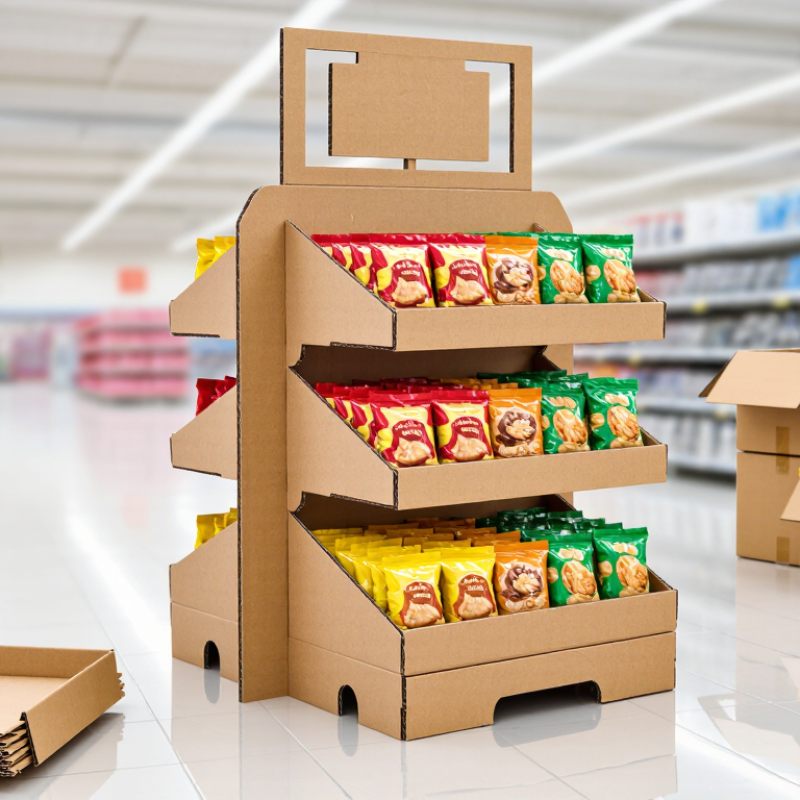
A cardboard snack display rack is a lightweight point-of-purchase fixture made from corrugated board or folding carton stock. It holds packaged snacks at eye level, near checkout lanes, aisle ends, or promotional zones. Unlike permanent metal shelving, it can arrive flat, print with strong graphics, and move quickly from warehouse to store.

The commercial case is measurable. Smithers’ report, The Future of Corrugated Packaging to 2029, identifies e-commerce, retail presentation, and recyclable fiber formats as continuing growth drivers. Grand View Research also estimates the global paper packaging market will expand steadily through 2030. These reports do not measure every snack rack directly. Still, they show why fiber-based merchandising remains commercially relevant.

Why use cardboard racks for snack displays? They combine visibility, speed, and manageable cost. A bright header card can frame a product message. Tiered shelves keep small bags facing shoppers instead of disappearing behind larger packs. Retail teams can assemble many units with minimal tools. That matters during seasonal launches or short promotions.

Packaging expert Anne Marie Mohan has described packaging as “a brand’s most tangible touchpoint.” Her point applies to displays, too. A rack is not merely storage; it shapes the shopper’s first physical impression. Yet cardboard is not automatically sustainable. Moisture, overloading, poor disposal systems, and excessive ink can weaken the claim. That deserves reflection.

The strongest designs use right-sized material, clear load limits, water-conscious coatings, and verified recycling guidance. Performance must come before appearance. A beautiful rack that collapses is still a poor retail solution.
What Is a Cardboard Snack Display Rack and Why Use It?

Definition and Basic Structure of a Cardboard Snack Display Rack

A cardboard snack display rack is a lightweight retail fixture made from corrugated paperboard or strong folding carton board. It holds packaged snacks at eye level or near checkout areas. Unlike a permanent metal shelf, it is designed for quick assembly, easy transport, and short- or medium-term promotion. The structure usually includes a flat base, upright side panels, several shelves, and a top header for product information. Some models also use locking tabs or simple slots instead of glue.

The base carries the main load and keeps the rack steady on a counter or floor. Shelves create separate rows for bags, boxes, or small pouches. Vertical dividers stop products from sliding sideways when customers remove one item. A printed header can show a product category, price message, or serving suggestion. In practice, shelf depth and paperboard thickness must match the snack package. A narrow shelf may look neat but perform poorly with wider bags.

Good design depends on testing, not appearance alone. I have found that a rack can seem stable when empty, then lean after uneven loading. Moisture is another weakness, especially near open doors or refrigerated areas. For reliable use, manufacturers should test weight, stacking order, transport handling, and floor balance. A small amount of extra board may increase cost, but it can prevent collapsed shelves and damaged packaging. The structure is simple, though not careless.

Common Types and Design Features of Cardboard Snack Racks

A cardboard snack display rack is a lightweight retail fixture made from layered paperboard. It holds packaged snacks and presents them at eye level. Its main value is simple assembly, low transport weight, and flexible printing. In my experience, a rack can refresh a small selling area without permanent shelving. It is not perfect, though. Humidity, heavy products, and rough handling can reduce its strength.

Common types include countertop racks, floor-standing towers, tray displays, and gravity-fed shelves. Countertop models suit checkout areas and compact stores. Floor-standing racks provide more capacity near entrances or promotional zones.

Tray displays allow quick product loading, while gravity-fed shelves move snacks forward as items are removed. Typical design features include dividers, locking tabs, reinforced bases, header panels, and die-cut windows. A clear viewing angle matters. Customers should see both the product and its information quickly.

Tips: Check the rack’s load limit before filling it. Keep heavier snacks on lower shelves. Measure the available floor or counter space carefully. Test assembly with real products, not empty packages. Moisture-resistant coating may help in humid areas, but it can raise costs. A wider base improves stability. Small adjustments often matter. After setup, inspect leaning shelves, loose tabs, and blocked product views during daily use.

How Cardboard Snack Display Racks Are Used in Retail

A cardboard snack display rack is a lightweight retail fixture made from layered paperboard. It presents packaged snacks at eye level or near checkout areas. Unlike a plain shelf, it gives products a defined space and clearer visual order. Its printed panels can also explain flavors, serving ideas, or limited offers.

Retailers often place these racks beside payment counters, store entrances, and busy aisle corners. Customers can see small snack packs while waiting or walking past. This location supports quick purchasing decisions. Staff can refill the shelves without special tools. The rack is also easy to move when seasonal layouts change. I have found that angled shelves improve visibility, especially when the front row is nearly empty. Small details matter.

Practical setup still requires judgment. A cardboard rack should match the product weight and package size. Heavy items may bend the shelves or make the unit unstable. Retail workers should check joints, floor contact, and stock levels each day. Dust and moisture can also reduce its useful life. Some displays look attractive but block nearby products, which weakens the entire shelf arrangement. That mistake is easy to make. Testing one rack in a real store can reveal problems that a design drawing misses. Clear pricing and tidy replenishment usually matter more than excessive decoration.

Benefits of Using Cardboard Snack Display Racks

What Is a Cardboard Snack Display Rack and Why Use It?

A cardboard snack display rack is a lightweight stand designed to present packaged snacks near buying areas. It uses shelves, printed panels, and dividers to keep products visible and organized.

In my retail setup experience, clear displays often help shoppers notice small items they might otherwise miss. A rack placed near checkout can encourage convenient add-on purchases without taking much floor space.

It also folds flat, which reduces storage and transport demands. That matters for temporary promotions and seasonal campaigns.

Benefits of Using Cardboard Snack Display Racks

Cardboard racks are usually more affordable than permanent fixtures. They can also be customized with simple colors, product information, and price labels. Their low weight makes repositioning quick, even in a busy store.

The open structure lets customers see flavor options without searching through deep shelves. This can improve product access and support faster stock checks.

However, cardboard is not perfect. Moisture, rough handling, and heavy loading may weaken the structure. I have found that attractive printing cannot compensate for poor shelf planning. Stability must come first.

Tips: Place the rack where customers naturally pause. Keep heavier packages on lower shelves. Leave enough space between product rows for easy grabbing. Check loose edges and bending panels each day. Rotate older stock forward, and avoid filling every shelf too tightly. A small test display can reveal problems before wider placement. Track which shelf positions sell best, but treat the results carefully. Store traffic changes with weather, pricing, and nearby promotions.

Factors to Consider When Choosing a Snack Display Rack

A cardboard snack display rack is a lightweight floor or countertop unit designed to hold packaged snacks near shoppers. Its open shelves improve visibility and make products easier to reach. Cardboard also supports quick assembly and lower transport weight. However, a cheap rack is not always a practical rack.

Load capacity deserves close attention. Check the shelf strength, base width, and locking points before placing full packages. A narrow rack may tip when customers remove items from the top shelf. Measure the available space carefully, including aisle clearance and nearby fixtures. A rack that looks compact in a warehouse can feel intrusive in a busy store. It happens.

Moisture resistance matters in cafés, convenience stores, and areas near refrigerated equipment. Ask whether the board has a protective coating, and inspect the edges for exposed fibers. Consider product size, shelf depth, and refill speed. Large bags need more clearance than small bars. Clear labeling helps shoppers understand prices without bending down. From practical store testing, racks with stable feet and simple refill access usually reduce daily frustration. Still, printed graphics can fade, and assembled joints may loosen over time. Review the rack after several weeks, not just on delivery day. Recyclability, safe materials, and responsible disposal should also influence the purchase decision.

FAQS

What is a cardboard snack display rack?

It is a lightweight stand made from layered paperboard. It holds packaged snacks near eye level or checkout counters. It uses shelves, dividers, and printed panels. Not indestructible.

Where should a snack rack be placed?

Place it near payment counters, entrances, or busy aisle corners. Customers often pause there. Keep nearby products visible. A rack can block traffic if positioned carelessly.

Which rack type suits a small store?

A countertop rack suits limited spaces and checkout areas. It holds fewer products but needs little floor space. A floor-standing tower offers more capacity. Measure first.

What design features improve product visibility?

Angled shelves can show products when the front row becomes low. Dividers keep packages orderly. Header panels provide quick information. Die-cut windows can expose the product clearly.

How should products be loaded safely?

Check the rack’s load limit before filling it. Place heavy packages on lower shelves. Leave enough room for easy grabbing. Overfilling may bend the shelves.

Can cardboard racks handle humid areas?

Moisture may weaken paperboard and loose joints. A moisture-resistant coating can provide extra protection. It may also increase costs. Keep the rack away from wet floors when possible.

How can retailers test a rack before wider use?

Assemble one unit in the actual selling area. Use real products, not empty packages. Watch for leaning shelves, loose tabs, and blocked views. Drawings miss some problems.

How should a rack be maintained daily?

Inspect shelf edges, joints, floor contact, and stock levels each day. Remove dust and rotate older stock forward. Refill neatly. Small checks prevent larger failures.

Conclusion

A cardboard snack display rack is a lightweight retail fixture made from corrugated or solid cardboard, typically featuring shelves, dividers, header panels, and a stable base. It is designed to organize snack products and present them at an eye-catching height. Common styles include countertop stands, floor displays, tiered shelves, and promotional units, with design features such as printed graphics, product compartments, easy assembly, and customizable shapes.

These racks are used in supermarkets, convenience stores, events, and temporary sales areas to improve product visibility and encourage impulse purchases. Why use cardboard racks for snack displays? They are affordable, portable, recyclable, and easy to customize for different products or campaigns. When choosing a rack, retailers should consider its size, load capacity, durability, moisture resistance, location, assembly method, visual appeal, and compatibility with the snack packaging. A well-selected display rack can make products easier to browse while supporting efficient retail presentation.

Charlotte

Charlotte

Charlotte is a seasoned marketing professional with a deep understanding of the company's portfolio and a passion for elevating its presence in the market. With a keen eye for detail and a commitment to excellence, she ensures that our professional blog is regularly updated with insightful articles......